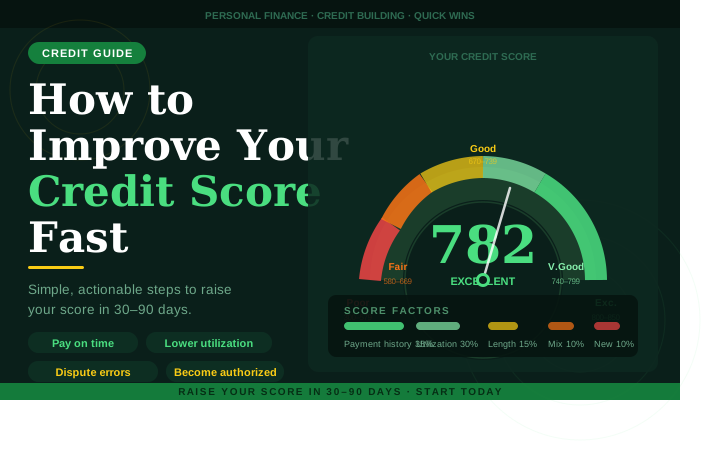
Your credit score affects your ability to get loans, rent apartments, and even land certain jobs. The good news: you can raise it quickly if you focus on the factors that matter most.
1. Pay Down Credit Card Balances (Fastest Impact)
Your credit utilization—how much of your available credit you’re using—is a major factor.
What to do:
- Keep usage below 30% (ideally under 10%)
- Pay off high balances immediately
- Make multiple payments per month if possible
Example:
If your limit is $1,000, try to keep your balance below $300 (or better, $100).
2. Pay Bills On Time—No Exceptions
Payment history makes up the largest portion of your score.
Action steps:
- Set up autopay
- Use reminders
- Catch up on any late payments immediately
Even one missed payment can hurt, but consistent on-time payments rebuild your score over time.
3. Become an Authorized User
If you have a trusted friend or family member with good credit:
- Ask to be added to their credit card as an authorized user
- Their positive history can boost your score
Make sure the account:
- Has low utilization
- Has a long, clean payment history
4. Dispute Errors on Your Credit Report
Mistakes are more common than people think.
Check your reports from:
Look for:
- Incorrect late payments
- Accounts you don’t recognize
- Wrong balances
Disputing errors can increase your score surprisingly fast.
5. Increase Your Credit Limit
This lowers your utilization ratio instantly.
Options:
- Request a credit limit increase
- Open a new credit card (carefully)
Only do this if you won’t increase your spending.
6. Avoid Hard Inquiries (Temporarily)
Each time you apply for credit, your score can drop slightly.
Strategy:
- Pause new applications for a few months
- Focus on improving existing accounts first
7. Keep Old Accounts Open
Length of credit history matters.
- Don’t close old credit cards
- Even if you don’t use them often, they help your score
8. Use a Secured Credit Card (If Starting Fresh)
If your score is low or you have no history:
- Deposit money as collateral
- Use the card responsibly
- Build positive payment history
9. Pay Off Collections (Strategically)
If you have collections:
- Negotiate a pay-for-delete (if possible)
- Or settle the account
Removing collections can significantly improve your score.
10. Track Your Progress Weekly
Use tools to monitor your score and changes.
Seeing progress helps you stay consistent and catch issues early.
How Fast Can Your Score Improve?
- Small improvements: 30–60 days
- Significant changes: 3–6 months
- Major rebuild: 6–12 months+
Speed depends on your starting point and how aggressive your actions are.
Also Read: Student Loan Repayment Strategies: A Practical Guide to Paying Off Debt Faster
Final Thoughts
Improving your credit score fast isn’t about tricks—it’s about focusing on high-impact actions:
- Lower your balances
- Pay on time
- Fix errors
Do these consistently, and your score will move in the right direction faster than you expect.