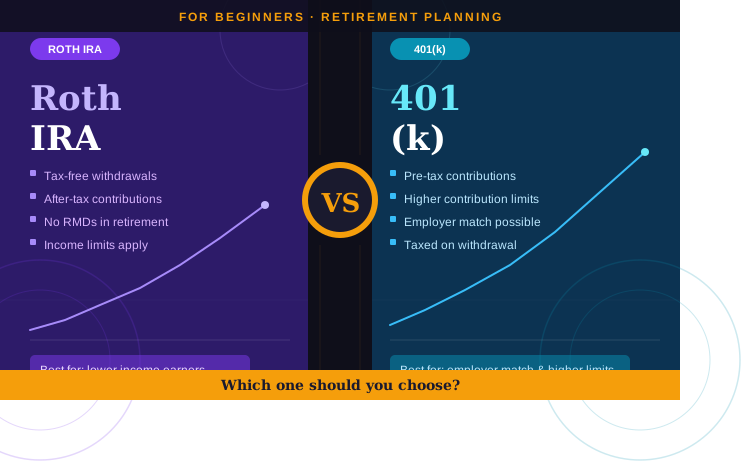
If you’re new to investing or planning for retirement, you’ve probably heard about a Roth IRA and a 401(k). They’re two of the most popular retirement accounts in the United States—but they work very differently.
Understanding the difference can help you make smarter financial decisions early, and potentially save (or earn) thousands of dollars over time.
What Is a Roth IRA?
A Roth IRA is an individual retirement account you open on your own (not through your employer).
Key Features:
- You contribute after-tax money
- Your investments grow tax-free
- You can withdraw money in retirement tax-free
Simple Example:
You invest $5,000 today. Over time, it grows to $50,000.
With a Roth IRA, you pay zero tax on that $45,000 profit when you withdraw it in retirement.
What Is a 401(k)?
A 401(k) is a retirement account offered by your employer.
Key Features:
- Contributions are pre-tax
- You reduce your taxable income today
- You pay taxes later in retirement
- Many employers offer a match (free money)
Simple Example:
You earn $50,000 and contribute $5,000 to your 401(k).
You’re only taxed on $45,000 this year.
The Core Difference (This Is What Matters Most)
The biggest difference comes down to when you pay taxes.
| Feature | Roth IRA | 401(k) |
|---|---|---|
| Taxes | Pay now | Pay later |
| Withdrawals | Tax-free | Taxed |
| Setup | You open it | Employer provides it |
Contribution Limits (2026 Snapshot)
- Roth IRA: About $7,000/year (more if 50+)
- 401(k): About $23,000/year (more if 50+)
This means a 401(k) allows you to invest much more money annually.
Employer Match: The Game Changer
One major advantage of a 401(k) is the employer match.
Example:
- You contribute 5%
- Your employer matches 5%
That’s an instant 100% return on your money
If your employer offers this, it’s usually smart to take full advantage of it first.
When a Roth IRA Is Better
A Roth IRA is often the better choice if:
- You’re young and earning less now
- You expect to be in a higher tax bracket later
- You want tax-free income in retirement
- You want more investment flexibility
When a 401(k) Is Better
A 401(k) may be better if:
- You want to reduce your taxes now
- You earn a higher income
- Your employer offers a match
- You want to invest larger amounts
Also Read: Money Mistakes to Avoid in Your 20s
Can You Use Both?
Yes—and this is often the smartest strategy.
Many people:
- Contribute enough to their 401(k) to get the full employer match
- Then invest in a Roth IRA for tax-free growth
- Then go back and increase 401(k) contributions if possible
This gives you tax diversification—some money taxed now, some later.
Which One Should You Choose as a Beginner?
If you’re just starting:
- If your employer offers a match → Start with 401(k)
- If no match → Start with Roth IRA
- If you can afford both → Use both strategically
Final Thoughts
Both the Roth IRA and 401(k) are powerful tools for building long-term wealth.
The right choice isn’t about which one is “better”—it’s about:
- Your income today
- Your expected future income
- Your tax strategy
Start early, stay consistent, and let time do the heavy lifting.