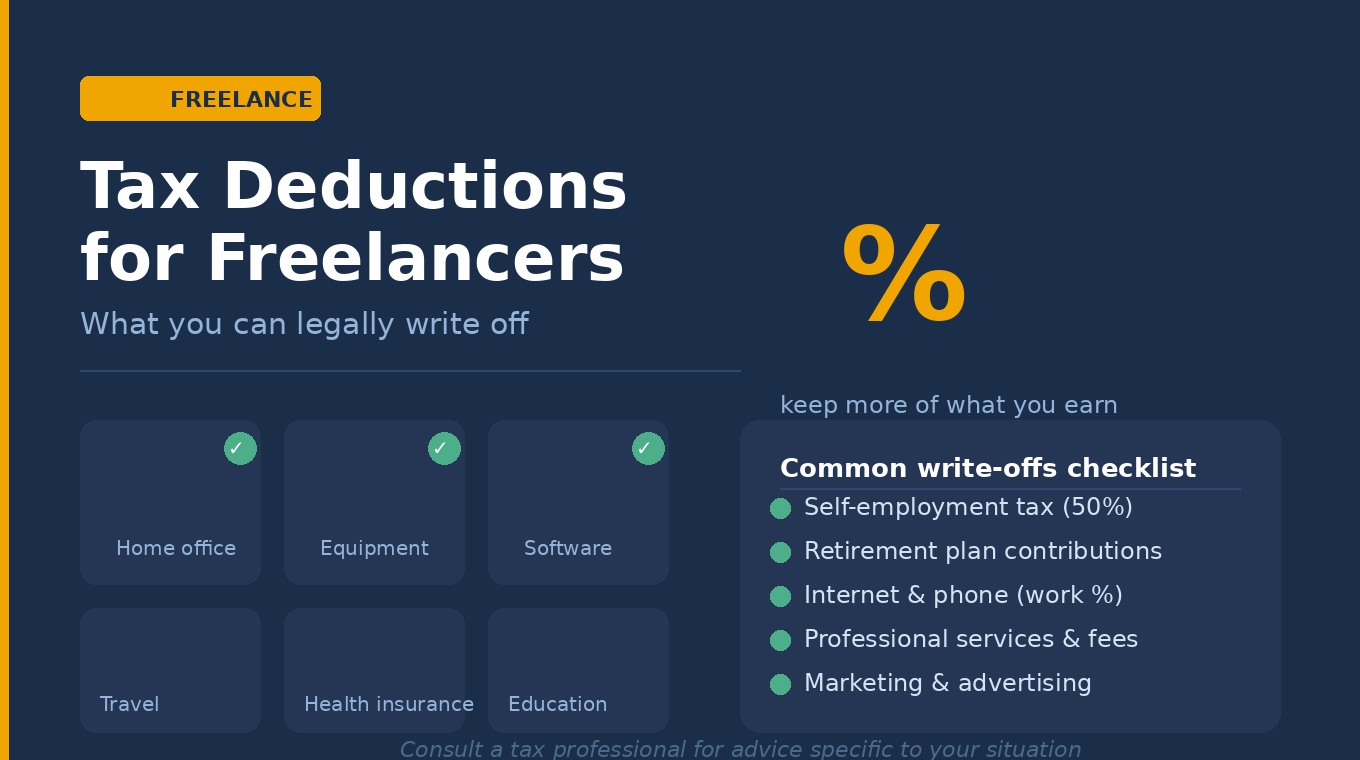
Freelancing gives you freedom—but it also comes with tax responsibility. The good news? You can significantly reduce what you owe by claiming the right deductions.
If you’re earning independently, understanding these deductions can save you hundreds or even thousands each year.
What Is a Tax Deduction?
A tax deduction lowers your taxable income, meaning you only pay tax on what’s left after expenses.
Example:
If you earn €30,000 and deduct €10,000 in expenses, you’re taxed on €20,000—not the full amount.
1. Home Office Expenses
If you work from home, you may deduct:
- A portion of rent or mortgage
- Electricity and internet
- Office furniture
The space must be used exclusively for work.
2. Internet and Phone Bills
Freelancers rely heavily on communication. You can deduct:
- Internet subscription
- Business calls
- Work-related mobile usage
If you use them partly for personal reasons, deduct only the business portion.
3. Equipment and Tools
Anything you need to do your job qualifies, such as:
- Laptop and accessories
- Software subscriptions
- Cameras or design tools
High-cost items may be deducted over time (depreciation).
4. Software and Subscriptions
You can write off tools like:
- Design software
- Writing tools
- Project management apps
- Cloud storage
If it supports your work, it counts.
5. Marketing and Advertising
Growing your freelance business costs money—and it’s deductible:
- Website hosting
- Paid ads
- Branding and logo design
- Email marketing tools
6. Professional Services
You can deduct fees paid to:
- Accountants
- Lawyers
- Business consultants
These services directly support your income.
7. Education and Skill Development
Courses, workshops, and training related to your field are deductible.
For example:
- Copywriting courses
- SEO training
- Business certifications
8. Travel and Transportation
If you travel for work, you can deduct:
- Transport (fuel, train, flights)
- Accommodation
- Meals (business-related portion)
Daily commuting typically doesn’t qualify—but client-related travel does.
9. Office Supplies
Small but frequent expenses add up:
- Notebooks
- Pens
- Printer ink
- Stationery
Keep receipts—these are easy wins.
10. Health Insurance (Where Applicable)
In many countries, freelancers can deduct health insurance premiums, depending on local tax laws.
Common Mistakes to Avoid
- Mixing personal and business expenses
- Not keeping receipts
- Overclaiming deductions
- Ignoring local tax rules
These can lead to penalties or audits.
Pro Tip: Track Everything
Use tools or simple spreadsheets to track:
- Income
- Expenses
- Receipts
Consistency makes tax filing easier and more accurate.
Final Thoughts
Freelancers often pay more attention to income than expenses—but smart deductions are where real savings happen.
The key is simple:
- Spend wisely
- Track everything
- Claim what’s legitimate
Do this consistently, and you’ll keep more of what you earn—legally.