If you’re building wealth from scratch, this question shows up early:
Should you save an emergency fund first—or start investing right away?
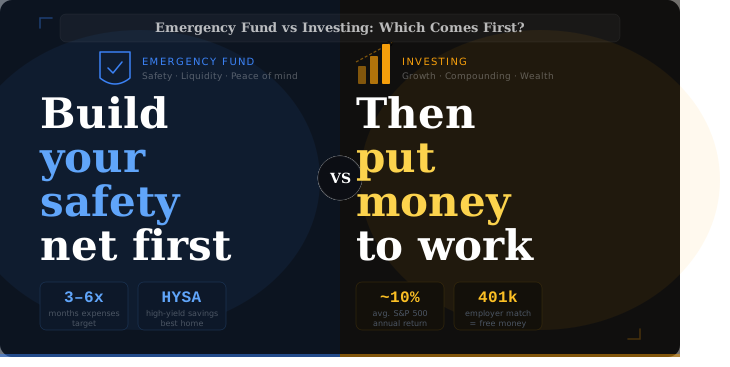
Short answer: build a basic emergency fund first, then invest. But the smarter answer is a bit more nuanced.
What Is an Emergency Fund?
An emergency fund is cash set aside for unexpected expenses like:
- Job loss
- Medical bills
- Urgent repairs
It’s typically kept in a safe, liquid place like a high-yield savings account so you can access it quickly without losing value.
Ideal Size:
- Minimum: $1,000 (starter fund)
- Better: 3–6 months of living expenses
- Freelancers/unstable income: 6–12 months
What Is Investing?
Investing means putting money into assets like:
- Stocks
- Index funds
- Real estate
Often through accounts like a Roth IRA or brokerage account, aiming for long-term growth.
Why Emergency Fund Comes First
1. It Protects Your Investments
Without savings, any emergency could force you to:
- Sell investments early
- Take on high-interest debt
That cancels out your progress.
2. It Reduces Financial Stress
Knowing you can handle surprises gives you:
- Stability
- Confidence to invest long-term
3. It Prevents Debt
No emergency fund often leads to:
- Credit card debt (high interest)
- Personal loans
Avoiding debt is just as important as investing.
But Should You Delay Investing Completely?
Not necessarily.
A smarter approach is a hybrid strategy.
The Smart Strategy (Best of Both Worlds)
Step 1: Build a Starter Emergency Fund
Save at least $1,000–$2,000 quickly.
Step 2: Start Investing (Especially If You Get Benefits)
If your employer offers a 401(k) with a match:
Contribute enough to get the full match
It’s essentially free money
Step 3: Grow Your Emergency Fund Fully
Build it up to:
- 3–6 months of expenses
Step 4: Increase Investing Aggressively
Once you’re financially stable:
- Maximize retirement accounts
- Invest consistently
When You Might Invest First
There are a few exceptions:
- You have stable income + low expenses
- You live with family (low financial risk)
- You’re getting a strong employer match
Even then, at least keep a small safety cushion.
Quick Comparison
| Factor | Emergency Fund | Investing |
|---|---|---|
| Risk | Very low | Moderate to high |
| Access | Immediate | May take time |
| Purpose | Protection | Growth |
| Returns | Low | Higher long-term |
The Real Truth Most People Miss
This isn’t an “either/or” decision.
It’s about timing and balance:
- Protection first
- Growth second
- Then scale both
Also Read: Best Career Paths After High School in the US
Final Thoughts
If you skip the emergency fund, your investments are fragile.
If you skip investing, your future wealth suffers.
The winning approach:
- Build a small safety net
- Start investing early
- Strengthen your financial foundation
Do both—but in the right order.